
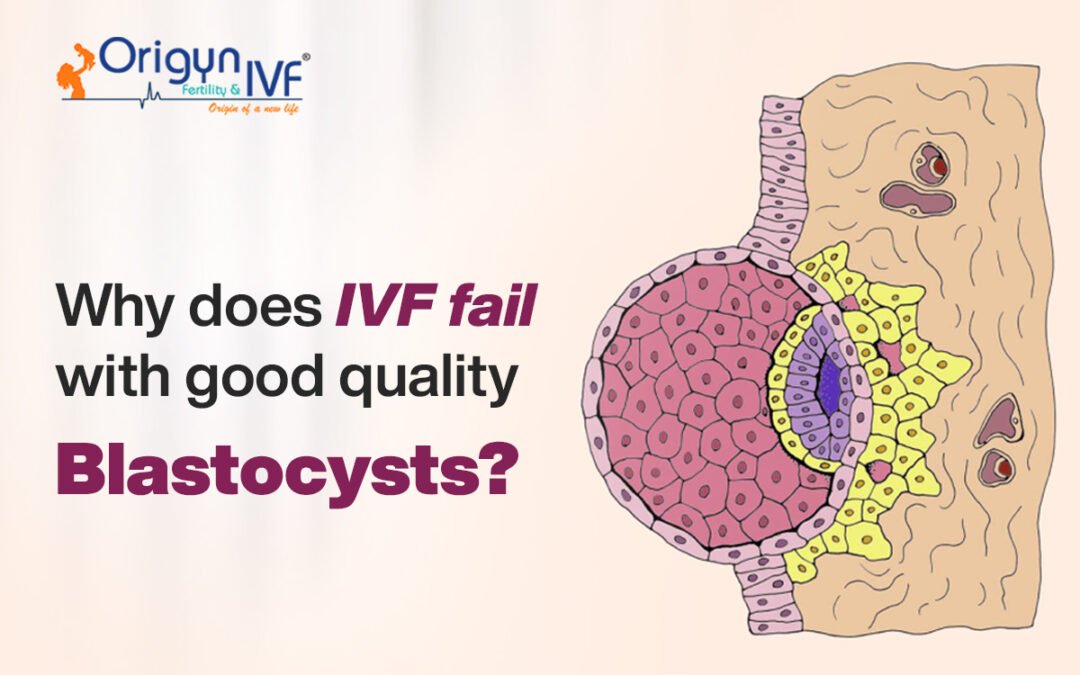
Why Does IVF Fail With Good Quality Blastocysts?
Share with your friends
About Dr. Rashmi Sharma
Dr. Rashmi Sharma is an IVF specialist, Consultant Reproductive Medicine, and Director Origyn Fertility & IVF, New Delhi. She holds MBBS (BHU), MD (BHU), DNB, MNAMS, FICOG, and a Diploma in IVF & Reproductive Medicine (Kiel University, Germany). Web Editor, Indian Fertility Society (2024–26). Former HOD, IVF Department, Moolchand Hospital, Delhi (2009–13) and Max Hospital, Pitampura, Delhi (2013–17). Director, Origyn Fertility & IVF, which has 4 branches across Delhi.
Origyn IVF has been accredited for a 1-year fellowship in IVF and Reproductive Medicine, along with an MSc in Clinical Embryology under Amity University and IFS collaboration.
Recipient of the “C. S. Dawn Award” for best paper presentation on IVF/ICSI with genital tuberculosis at the All India Congress of Obstetrics and Gynecology (AICOG 2010).
Recipient of the “Hall of Fame – Best IVF Specialist in India – North” at the Economic Times National Fertility Awards in 2019, 2023, and 2024.
Origyn IVF received the “Best IVF Center in North India” and “Most Integrated Team in IVF – North” at the Economic Times National Fertility Awards in 2019 and 2024.
Recipient of the “Best IFS Executive” award at Fertivision 2018, Kochi. Authored various chapters in reputed infertility textbooks with numerous national and international publications and presentations.
Contact Us
Couples who undergo IVF and getting to the blastocyst stage can feel like a huge achievement. After a few weeks of taking medications, checking, egg retrieval and lab procedures, knowing your results that show you’ve got healthy blastocyst could bring a feeling of joy and optimism. However, the pregnancy test results are unfavorable despite the transfer of a healthy embryo, it could be depressing and heartbreaking.
A lot of patients ask “How does IVF fail with good quality blastocysts?” The truth is that embryo quality is just one aspect of a bigger puzzle. Even the best looking blastocysts will not guarantee pregnancy or implantation.
At Origyn IVF, we believe that knowing the causes of IVF results will help patients make educated decisions and feel more secure during their fertility journey. This article will look at the reasons why IVF is sometimes unsuccessful even though blastocysts are of high-quality and the ways to increase the chance of success.
What Is a Good-Quality Blastocyst?
A blastocyst embryo has been developing for five to six days following fertilization. In this stage the embryo contains hundreds of cells. It has also transformed into the structures that eventually create the baby and the placenta.
The blastocysts are analyzed by embryologists based on various factors, such as:
- Development stage and expansion
- Quality of inner cell mass
- Quality of the trophectoderm (cells which form the placenta)
- Overall appearance of the lens
A high quality blastocysts generally has a greater likelihood of being conceived than low-grade embryos. However, an attractive appearance does not necessarily mean that an embryo’s genetics are normal, or is likely to result in a successful pregnancy.
Why Does IVF Fail With Good Quality Blastocysts?
If you have experienced an IVF Failure with high quality blastocysts, that doesn’t necessarily mean something occurred was wrong. Many factors can influence the outcome of implantation and pregnancy.
1. Chromosomal Abnormalities in the Embryo
One of the most frequent causes of IVF failure in implantation is concealed genetic abnormalities.
The embryo may appear flawless under a microscope, yet have genetic problems that hinder the implantation process or cause premature miscarriage. This is most common among women with advanced maternal age.
This is the reason why a few fertility experts recommend the Preimplantation Genetic Test (PGT) for patients who are selected. Genetic testing is a way to identify embryos that have the right number of chromosomes, and help enhance the selection of embryos.
2. Problems With the Uterine Lining
The embryo, even if healthy, needs an uterine environment that is receptive in order to successfully implant.
Factors that could influence the lining of the uterine cavity include:
- Thin endometrium
- Insufficient blood flow to the uterus.
- Endometrial inflammation
- Polyps
- Fibroids
- Scar tissue inside the uterus
If the uterus isn’t completely prepared, implantation might not happen despite transferring an embryo that is of superior quality.
3. Implantation Window Issues
The uterus is able to accept embryo implantation during an exact time frame called the “window of implant.”
In certain females, the window can be delayed by one or two days. If the timing of embryo transfer is not in perfect alignment with the uterine receptivity implantation could not be successful.
Tests like those of the Endometrial Receptivity Analysis (ERA) could help determine the ideal timing for embryo transfer in some situations.
4. Immune System Factors
The immune system plays a crucial part in the pregnancy.
In certain circumstances the abnormal immune response may hinder embryo implant. Researchers continue to study this issue, however immune-related factors are an explanation for the persistent IVF failures in certain patients.
Your fertility specialist could suggest further investigations if immune concerns are being considered.
5. Hormonal Imbalances
The success of implantation is contingent on the delicate balance of hormones.
Issues that concern:
- Progesterone levels
- Thyroid function
- Prolactin levels
- Insulin resistance
could negatively impact the development of implantation and early pregnancy.
Before the embryo transfer cycle fertility specialists typically evaluate and improve these hormonal elements.
6. Lifestyle and Health Factors
Lifestyle choices can impact IVF success in greater ways than most people are aware of.
A few factors that could decrease the rates of implantation are:
- Smoking
- Excessive alcohol consumption
- Obesity
- Chronic stress
- Poor sleep quality
- Uncontrolled diabetes
Achieving better overall health prior to treatment can help create a favorable environment for the implantation of embryos and pregnancy.
7. Sperm Quality Issues
While the process of grading embryos is mainly focused on appearance, the health of sperm is also important.
DNA fragmentation in sperm could influence the development of embryos even if the blastocyst seems normal. In some instances advanced sperm testing can assist in identifying male-factor fertility problems.
8.Endometriosis and Adenomyosis
Women with adenomyosis and endometriosis might have lower rates of implantation with high-quality embryos.
These conditions could affect the condition of the uterine lining, making an implanting process more difficult.
The right treatment and personalized IVF plans can enhance results in these cases.
Can IVF Failure Be Due to Bad Luck?
Surprisingly, yes.
In the best of circumstances embryo implantation is a very complex biological process. It is not always possible for every embryo to implant successfully, even if they are genetically healthy and inserted into a healthy uterus.
A single unsuccessful IVF cycle doesn’t necessarily indicate a problem. Sometimes, implantation just isn’t happening even though everything appears to be in order.
It can be among the more challenging aspects of fertility treatments, however, it’s also the reason why so many patients are successful with subsequent cycles.
What Should You Do After a Failed IVF Cycle?
If you’ve been through an IVF Failure with high-quality blastocysts it is important not to lose hope.
A fertility specialist may recommend the following things:
Reviewing the Cycle
A thorough examination can reveal elements that may have influenced the process of implantation.
Additional Testing
Based on your personal history, testing may be suggested to check:
- Genetic influences
- Uterine health
- Balance of hormones
- Endometrial receptivity
Lifestyle Optimization
Simple modifications like keeping an ideal weight, enhancing diet, managing stress and exercising regularly could positively impact the future results.
Personalized Treatment Planning
Each fertility journey is different. A tailored treatment strategy usually offers the greatest chance of success on the future IVF attempts.
How Can IVF Success Rates Be Improved?
Although no fertility treatment will assure pregnancy, there are strategies that can improve the chances of success:
- Finding the best embryos
- Optimizing uterine health
- Resolving imbalances in hormones
- Management of medical conditions that are underlying
- Consider genetic testing when appropriate
- Maintaining a healthy lifestyle
- Working with an experienced team of fertility experts.
Remember that the success of IVF depends on the interaction between the embryo the uterus, hormones, genetics and general health.
Conclusion
Experiencing an IVF failure with high quality blastocysts is emotionally difficult particularly when it appears to be going smoothly. But, the quality of the embryo is only one element in a complex process. Implantation is dependent on multiple elements that include uterine health, genetics, hormonal balance, lifestyle elements and timing.
The positive side lies in the fact that a failed IVF cycle doesn’t mean that your IVF journey is done. With careful assessment, customized treatment and professional guidance, several couples get pregnant in subsequent cycles.
At Origyn IVF, our team is committed to offering the latest fertility treatments, compassionate care and customized treatment plans that will aid you in becoming a parent.
If you’ve experienced IVF failure or are thinking about fertility treatment, call Origyn IVF today to discuss your options with our fertility experts. If you’re looking for fertility advice, patient stories or professional guidance, don’t forget to follow Origyn IVF on Instagram and YouTube
Frequently Asked Questions
- Do good quality blastocysts not implant?
Yes. Even the most high-quality blastocysts may not implant due to hormonal issues, genetic anomalies, uterine factors, hormonal problems or the issues with timing of implantation.
- How often do you experience IVF failures with high-quality embryos?
It’s more common than people imagine. A high-quality embryo increases the chance of success, but it doesn’t guarantee the possibility of pregnancy.
- Do I need to undergo PGT testing after an unsuccessful IVF cycle?
PGT can be beneficial to certain patients, specifically those who have multiple IVF failure, multiple miscarriages, or those with advanced maternal age. Your fertility specialist will be able to advise whether PGT is suitable for you or not.
- What number of IVF cycles are normally required to achieve success?
A majority of couples are pregnant within a few IVF cycles, but the success rate varies based on fertility status, age and general health.
- What is the main cause of the recurrent IVF implant failure?
The reasons for this can be varied, however common causes include problems with uterine lining, chromosomal disorders, hormone imbalances, endometriosis, as well as issues with the endometrial receptivity.
Recent Comments