
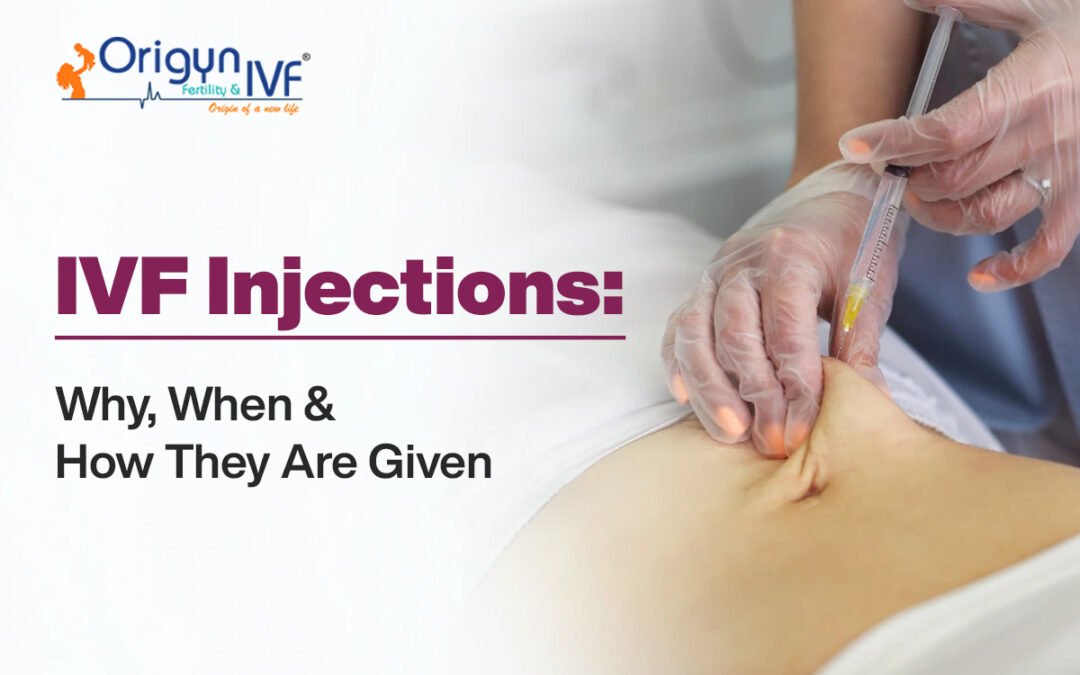
IVF Injections: Why, When & How They Are Given
IVF injections are one of the most vital parts of an IVF journey, but they’re also among the most disregarded. Many couples get worried when they hear about the daily injections, dosage schedules and hormonal treatments. However, the truth is that IVF injections are easy, safe and vital to increase the chances of pregnancy.
If you’re considering IVF or already in the process of starting your cycle, knowing these injections will make the whole procedure less stressful. At Origyn Fertility and IVF, Dr. Rashmi Sharma, her goal is to guide and educate patients throughout the process to ensure they can feel comfortable and educated throughout their journey.
In this blog we’ll explain everything to know about IVF injections: why they’re necessary, when they’re given the right dosage, how to take them, and what to expect.
What are IVF injections?
IVF injections consist of hormone drugs which help to stimulate the ovaries, manage the ovulation cycle, and prepare eggs for retrieval during the IVF procedure.
The injections are designed to:
- Produce multiple eggs instead of just one.
- Avoid the early Ovulation
- Ensure proper egg maturation
In a normal cycle, the woman only produces one egg each month. However, during IVF, doctors attempt to take multiple eggs to boost the success rate.
What is the Reason For IVF Injections?
One of the most frequent questions is: “If my body already produces eggs, why do I require injections for IVF?”
Here’s the quick solution:
More eggs = Higher success chances
In the natural cycle:
- There is only one egg available.
- If fertilization does not work, this cycle will be unsuccessful.
With IVF injections:
- Many eggs are produced
- More embryos can be created.
- More likely to be successful implantation
This is the reason IVF injections play such a vital part in enhancing the outcomes.
Different Types of Injections
There are three kinds of IVF injections, each of which serves an individual purpose.
1. Stimulation Injections (FSH and LH Hormones)
This is the first batch of IVF injections offered.
Purpose:
- Stimulate ovaries to produce multiple eggs
Includes:
- FSH (Follicle Stimulating Hormone)
- LH (Luteinizing Hormone)
When are they given?
- Days 2 and 3 in menstrual flow
- It continued for 8-12 days.
These IVF injections transmit higher-quality messages to the ovaries encouraging multiple follicles to grow simultaneously.
2. Antagonist Injections (To Prevent Early Ovulation)
Once the eggs begin developing, the body will naturally attempt to release them earlier. That’s where the second kind of IVF injections are used.
Purpose:
- Prevent premature ovulation
- Keep eggs intact until retrieval
When are they given?
- Between Day 5 or 6 of stimulation
- Continued until egg retrieval
These IVF injections allow doctors to control the time of ovulation.
3. Trigger Injection (Final Maturity Injection)
It is the most important IVF injection in the entire cycle.
Purpose:
- Eggs are matured to the final stage.
- Prepare eggs for retrieval
Types:
- hCG injection
- GnRH agonist
- Sometimes a combination
Important Note:
Timing is everything.
- It is essential to take the medication at the exact time as prescribed
- Even a small delay could impact egg quality
The incorrect timing of this IVF injection could result in eggs that are not mature and decrease chances of success.
When are IVF Injections given? (Timeline)
Here’s a brief timeline that explains the process IVF injections are scheduled
|
Day of Cycle |
Injection Type |
Purpose |
|
Day 2–3 |
Stimulation injections |
Egg development |
|
Day 5–6 |
Antagonist injections |
Prevent ovulation |
|
Day 10–12 |
Trigger injection |
Final egg maturation |
The schedule could change based on each response, but it will give a general idea of the process by which IVF injections are scheduled.
What is the Procedure ?
One of the most common concerns that patients have is complexity and pain. But the reality is different.
Method:
- Injections that are subcutaneous (under the skin)
- Usually, it is administered through the abdomen.
Who can give them?
- The patient herself
- The husband or a family member
- There is no need to go to the clinic each time
These IVF injections are easy to administer and include small needles, making them almost painless.
How to Store IVF Injections Correctly
A proper storage system is vital for the effectiveness of IVF injections.
Storage Guidelines:
- Refrigerate (2degC to 8degC)
- Place the items in the refrigerator in the door section
- Do not freeze.
- Don’t leave outside for long time
Since IVF injections are temperature-sensitive, improper storage can reduce their effectiveness.
Dosage: Why it’s Important
Many IVF injections come in multiple dose vials.
For instance:
- Total vial: 1200 units
- Required dose: 150-300 units
Important Tips:
- Always be sure to measure the exact dose
- Use the syringe properly
- Do not inject the entire vial at the same time
Incorrect dosages of IVF injections could alter the outcome of treatment and raise the cost of treatment.
Do IVF Injections Cause Pain?
The good news is that IVF injections aren’t very painful.
- Small needle size
- Injected into the fat layer
- Minimal discomfort
The majority of patients are at ease after IVF injections in a couple of days.
The Side Effects of IVF Injections
The majority of IVF injections are made up of natural hormones, therefore any side effects are generally minor.
Symptoms included:
- Fluid accumulation
- Breathing difficulty
- Abdominal swelling
However, with modern IVF techniques, especially embryo freezing, this complication is now very rare.
Common Side Effects
- Mood swings
- Bloating or water retention
- Mild bruising at injection site
- A slight itching
Severe Negative Side Effects (Rare):
Earlier, a condition referred to as Ovarian Hyperstimulation Syndrome (OHSS) was diagnosed.
The symptoms include:
- Fluid accumulation
- Breathing difficulty
- Abdominal swelling
However, with the advancement of IVF techniques, including frozen embryos, the issue is becoming very rare.
Important precautions to take when taking Injections
To get the most effective results, try these suggestions:
- Take injections at the same time daily
- Follow the doctor’s advice strictly
- Double-check dosage
- Do not forget the trigger injection timing
- Store medicines properly
These simple steps can make the difference in your IVF success.
Why Choose Origyn IVF and Fertility?
At Origyn Fertility & IVF, patient education and comfort are the top goals. From guiding you on IVF injections to supporting you emotionally, the team ensures a smooth and stress-free experience.
- Expert guidance from experts
- IVF protocols that are personalized
- Easy-to-follow instructions for injections
- Help at any stage of treatment
Conclusion
IVF injections may sound intimidating initially, however they’re extremely well-planned and vital elements of the IVF procedure. They can help improve egg production and increase the chances of a successful pregnancy.
With the right guidance, proper timing, and carefully handled, IVF injections become easy to manage, even at home.
At Origyn Fertility and IVF under the care of Dr. Rashmi Sharma, patients receive total support and clarity throughout the IVF journey. If you’re planning IVF or have questions regarding IVF injections do not hesitate to take the next steps.
Visit the Origyn website to book your consultation.
Follow Origyn on YouTube and Instagram for expert guidance and patient education.
Call now or book an appointment to begin your IVF journey in confidence
Your path to parenthood can begin today–with the right information and the right support.
Frequently Asked Questions
- Is IVF injections painful? IVF injections uncomfortable?
There is no need to worry, IVF injections are usually non-invasive since they are administered under the skin with small needles.
- Can I get IVF shots at my own home?
Yes, many IVF injections can be administered by yourself or by a partner with proper instruction.
- What happens if I don’t get my IVF injection?
The absence of a dose could alter your cycle. Make sure to consult your doctor right away when you have missed one.
- What is the reason why trigger injections are so crucial?
The trigger injection is a guarantee that the final egg matures and should be administered at the specified time.
- Are there any significant adverse effects from IVF injections?
The majority of side effects are minor. More serious issues like OHSS are rare now thanks to modern methods.
- How long do I have to be taking IVF injections?
In general, injections are administered between 10 and 12 weeks, based on the response you get.
- Do IVF injections assure the birth of a baby?
However, they can significantly increase the odds of success, by increasing the amount of eggs that are available.
Recent Comments