
In Vitro Fertilization
Home / Services / In Vitro Fertilization
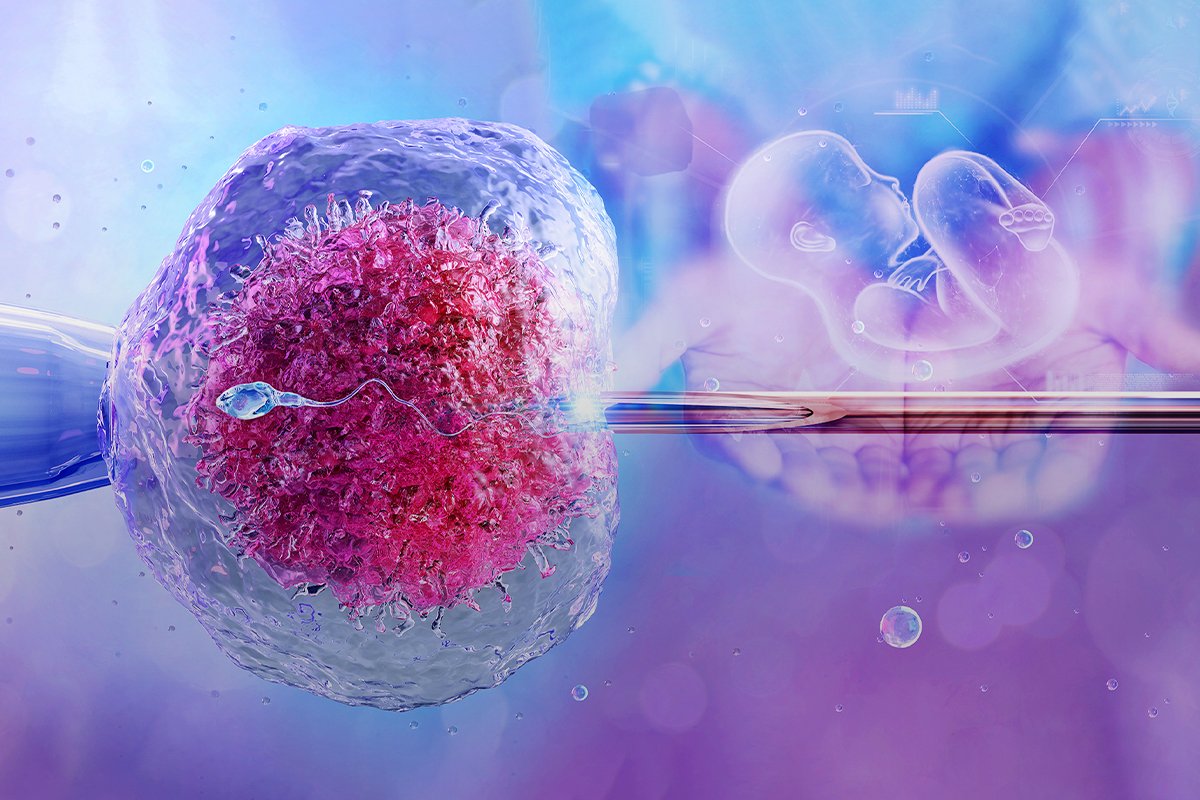
Simply put, to conceive naturally you need healthy eggs, sperm, uterus, and fallopian tubes; any problem with these can lead to infertility and may require assisted reproductive techniques like IVF or ICSI. IVF is recommended for women with blocked or damaged fallopian tubes, unexplained infertility for more than two years, repeated failure of ovulation induction and IUI, moderate to severe endometriosis, reduced ovarian reserve, or premature ovarian failure where egg donation may be necessary. On the male side, infertility factors such as low sperm count, poor motility, or abnormal sperm shape often make IVF with ICSI the best option. In cases of no sperm in semen, sperm can be retrieved directly from the testis and used in IVF-ICSI to achieve fertilization.
The entire IVF procedure is divided broadly into five stages
Ovarian Stimulation and Monitoring
In a natural cycle, one egg matures each month, but during IVF, injectable medications are given for 8–12 days to stimulate the ovaries to produce multiple eggs, improving success rates. Monitoring is done through transvaginal ultrasound to track follicle growth and uterine lining thickness, along with blood tests if required such as estrogen levels, which rise as the eggs mature.
Egg (Oocyte) Retrieval
After the stimulation phase, a trigger shot is given to mature the follicles, and eggs are retrieved before ovulation. The 10–20 minute procedure uses ultrasound guidance to collect eggs from the follicles, which are then handed over to the embryologist.
Fertilization
After eggs and sperm are collected, the embryology team initiates fertilization using either Conventional IVF or ICSI. In conventional IVF, multiple sperm are placed with each egg in a dish and left to fertilize naturally in the incubator. In ICSI, a single healthy sperm is injected directly into the egg to ensure fertilization.
When is ICSI needed?
ICSI is recommended when sperm count or quality is poor, when sperm are retrieved from the testis, unexplained infertility, previous IVF fertilization failure, or when PGD/PGS is required to avoid interference from extra sperm.
Embryo Transfer (ET)
Embryo transfer is a quick, painless procedure performed under ultrasound guidance, usually taking about five minutes. Before the transfer, the IVF specialist and patient decide the number of embryos to transfer and the plan for any remaining embryos. Depending on embryo quality and development, the transfer may be done on day 2/3 or at the blastocyst stage (day 5).
The Pregnancy Test
About 12 days after embryo transfer, a beta-HCG blood test is done to confirm pregnancy. The test is repeated after 48 hours, as healthy pregnancies typically show a doubling of HCG levels every two days. IVF success, however, depends on multiple factors.
Expertise You Can Trust
Our IVF specialists bring years of experience and a proven track record, ensuring that every step of your journey is guided with precision, safety, and trust.
Personalized Pathways to Parenthood
Every couple’s fertility journey is unique,
so we offer personalized treatment plans for your medical and emotional needs.
Comprehensive Fertility Solutions
From diagnosis to advanced treatments like IVF, ICSI, and genetic testing, we offer complete fertility care under one roof.

We also welcome you to visit us at any of our three convenient locations:
South Extension (South Ex): Flat, 3rd Floor, N, Front, 5, South Extension I, New Delhi, Delhi 110049
Pitampura: 4th Floor, above Max Hospital, HB Twin Towers, Near TV Tower, Wazirpur District Centre, Pitampura, New Delhi, Delhi 110034
Vikaspuri: H-482, Sharma Hospital, Near K.R. Mangalam School, Vikaspuri, New Delhi, Delhi 110018
Whether online or in person, our team is here to guide you with expert care and support.