
Ectopic pregnancy is one of the most severe complications that can develop during the early stage of pregnancy. It happens when the pregnancy implants in the wrong place, and without timely diagnosis, it can become life-threatening.
Dr. Rashmi Sharma, an infertility and IVF expert at Origyn IVF in Delhi, addresses this condition in very simple language that is easy to understand. With three locations throughout Delhi and online consultation, Origyn IVF can provide a knowledgeable opinion to women anytime they need it.
In this blog, you will learn: (1) about this pregnancy, (2) why it develops, (3) symptoms you should never ignore, (4) how to diagnose it, (5) treatment for it in 2025, including when surgery is necessary and how fertility will be managed post-surgery.
Understanding Ectopic Pregnancy
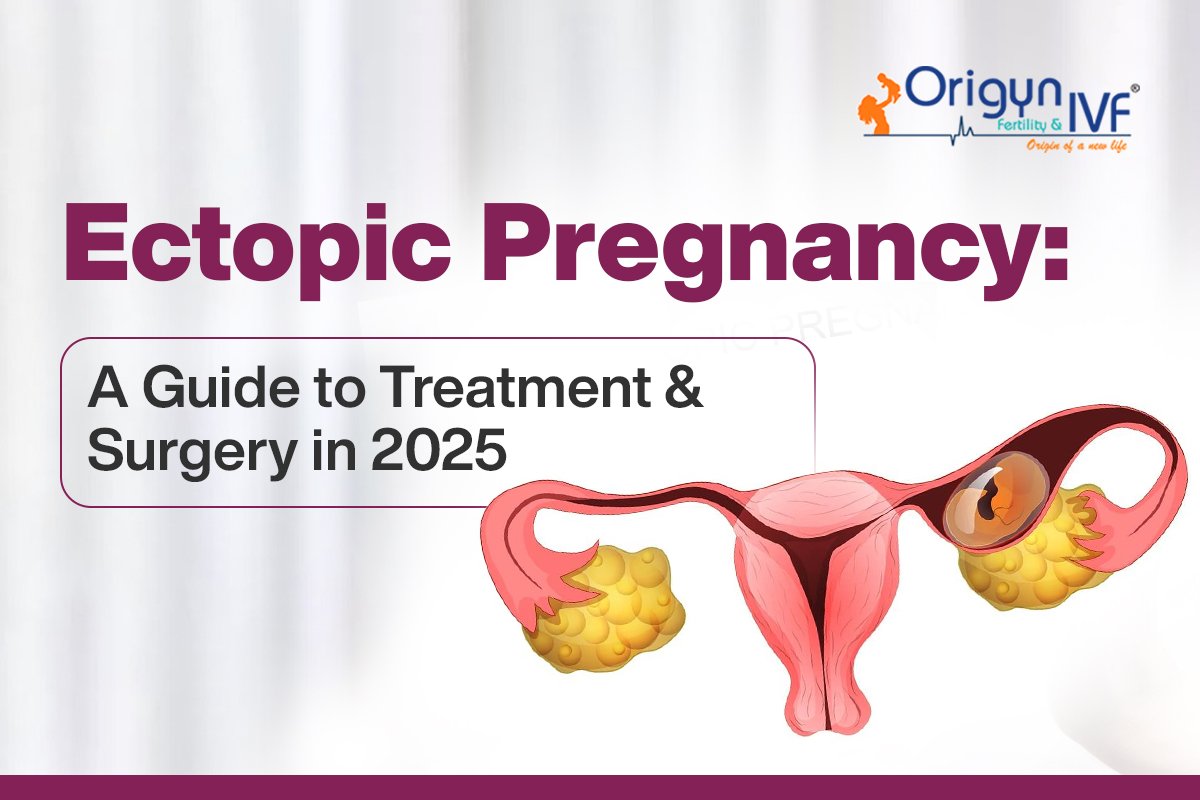
This Pregnancy refers to any pregnancy that develops outside the uterus. The uterus is the only organ capable of nurturing a growing baby. When implantation happens elsewhere, the pregnancy cannot continue safely.
Places where ectopic pregnancy can occur include:
- Fallopian tube (most common)
- Cervix
- Cesarean scar
- Abdomen (very rare)
The majority are tubal ectopic pregnancy cases, where the fertilized egg gets stuck inside the fallopian tube. Because the fallopian tube is narrow and cannot stretch like the uterus, the pregnancy usually cannot progress beyond 6–7 weeks. Without early detection, rupture of the tube may occur causing internal bleeding which can endanger your life.
How Pregnancy Generally Occurs
Understanding it becomes much easier when you know how natural conception works Every month:
- A woman releases an egg from her ovary.
- This egg enters the fallopian tube.
- Millions of sperm travel through the vagina → cervix → uterus → fallopian tube.
- Fertilization happens inside the tube itself.
- The early embryo stays in the tube for 4–5 days, receiving nutrition.
- The embryo moves slowly through the fallopian tube down to the uterus for implantation.
If the fallopian tube is healthy, eventually the embryo makes it to the uterus and implants there. But if the tube is damaged, blocked, scarred, or its movement is disturbed, the embryo may implant inside the tube. This results in ectopic pregnancy, which cannot grow to full term.
Causes of Ectopic Pregnancy
The principle cause is tubal dysfunction. Any disorder of the fallopian tubes will hinder the embryo’s normal movement.
Possible reasons include:
- Previous pelvic infections
- Pelvic inflammatory disease
- Tubal adhesions
- Prior surgeries
- Endometriosis
- Tubal scarring
- Abnormal tube movement
When the tube cannot push the embryo toward the uterus, implantation happens in the wrong place.
How Common This Pregnancy is
Many people underestimate how common it is.
- 1%–2% of all pregnancies will be
- This is about 1 in every 50–100 pregnancies.
If someone experiences one ectopic pregnancy, the risk becomes significantly greater:
- The risk of a second ectopic pregnancy is 50%.
- This happens because if one tube has been damaged, the other tube usually has the same underlying
Symptoms and Early Warning Signs
The symptoms are vary depending on whether it has ruptured or not.
-
Symptoms When the Ectopic Pregnancy Has Ruptured
When the pregnancy ruptures the tube, it becomes a medical emergency. Symptoms may include:
- Sudden, severe abdominal pain
- Fainting or collapse due to blood loss
- Dizziness
- Weakness
- Heavy internal bleeding
- Shoulder pain (due to internal blood irritation)
This situation must be treated immediately in an operation theatre because delay can be life-threatening.
-
Symptoms Before Rupture
Not all ectopic pregnancy cases show strong symptoms early on. In many cases, women feel normal and the condition is discovered during routine early pregnancy scans.
Doctors usually suspect ectopic pregnancy if:
- The gestational sac is not visible in the uterus.
- A suspicious mass is seen in the fallopian tube.
- Beta hCG hormone levels don’t rise normally.
This is why the doctor stresses the importance of early ultrasound and timely beta hCG testing, especially in women with previous tubal issues.
Methods Used to Diagnose Ectopic Pregnancy
Diagnosing ectopic pregnancy early can prevent complications.
- Ultrasound Scan
This is the primary diagnostic tool. If pregnancy is seen outside the uterus or not seen in the uterus at all, doctors explore the fallopian tubes for signs of ectopic pregnancy.
- Beta hCG Blood Test
When ultrasound findings are unclear, serial beta hCG testing helps detect abnormal hormone patterns. Together, ultrasound and beta hCG help accurately locate the pregnancy.
Management and Treatment Options for Ectopic Pregnancy
Treatment depends on whether the pregnancy is ruptured or unruptured, and how early it is diagnosed.
-
Treatment When the Ectopic Pregnancy is Ruptured
A ruptured ectopic pregnancy is an emergency. The treatment clearly states:
- Surgery is compulsory
- Treatment must happen immediately
- Internal bleeding can reach up to 3–4 liters
- Delay can be fatal
Even if a patient feels stable, internal bleeding can worsen quickly. Therefore, emergency surgery is the safest and only solution.
-
Management of Ectopic Pregnancy When it is Not Ruptured
If it is caught early enough, surgery may not be necessary. Doctors may prescribe an injection of Methotrexate (dubbed Mithri).
This drug:
- Stops the ectopic pregnancy from developing.
- Aids in dissolving the pregnancy tissue.
- Avoids the requirement for surgery.
But, the treatment will require:
- Multiple hospital visits.
- Serial hCG beta testing.
- Follow-up ultrasounds.
Not all cases will qualify for Methotrexate, but having an early diagnosis significantly improves the ability to avoid surgery.
When Surgery is Required
Not every ectopic pregnancy requires surgery, but when one of the following occurs an operation is needed:
- The tube has ruptured
- The patient has internal bleeding
- Pain is severe
- The pregnancy is large
- Medical management has not been effective
Surgery may involve removing the affected tube or opening the tube to remove the pregnancy. The choice depends on the condition of the patient and the extent of tubal damage.
Fertility and future pregnancy following ectopic pregnancy. Many women are worried after this pregnancy about conceiving again.
Effects on Fertility
After ectopic pregnancy –
- One tube may be prematurely damaged,
- In addition, the second tube will also probably have issues.
- Natural chances of conceiving are moderately less likely.
Risk During the Next Pregnancy: Women who had one ectopic pregnancy are at higher risk (50%) of having another one. This is why early testing in the next pregnancy is essential
Role of Fertility Specialist: Once recovery is complete. A fertility specialist evaluates the second tube & decide whether natural conception, IUI, or IVF is safer.
When IVF is Recommended
IVF becomes a preferred option for many because:
- It bypasses the fallopian tubes.
- It reduces the chance of another ectopic pregnancy.
- It improves the likelihood of a healthy pregnancy.
At Origyn IVF, many women with tubal issues successfully conceive through IVF.
Conclusion
A good understanding of ectopic pregnancy can prevent complications and allow timely management. With specialist support and early diagnosis, women can have ectopic pregnancy managed safely and consider healthy pregnancies in the future! Dr. Rashmi Sharma and the team at Origyn IVF offer comprehensive support from diagnosis to management and future family planning.
To learn more, follow Origyn IVF on Instagram and YouTube; they provide educational information and show real patients!
Frequently Asked Questions
- How early can this pregnancy be diagnosed?
It can be diagnosed within the first few weeks using early ultrasound and beta hCG tests, especially when monitored closely.
- Does Methotrexate work for large ectopic pregnancies?
No. Methotrexate works best for small, unruptured ectopic pregnancy cases with lower beta hCG levels.
- Can a woman have a normal pregnancy after an ectopic pregnancy?
Yes, many women conceive naturally again, but careful monitoring is required in early weeks.
- Why is early ultrasound important for women with tubal issues?
Because early scanning helps detect ectopic pregnancy before rupture, allowing safer and less invasive treatment.
- Does IVF guarantee zero risk of ectopic pregnancy?
While IVF significantly reduces the risk, a very small chance remains. However, it is much lower than natural conception.

Recent Comments