
• 80 80 80 90 84
  • info@origynivf.com
Curious About IVF? Let's Talk.
  • January 30, 2026

Cysts: Meaning, Symptoms, Causes and Treatment Options

Share with your friends

About Dr. Rashmi Sharma

Dr. Rashmi Sharma is an IVF specialist, Consultant Reproductive Medicine, and Director Origyn Fertility & IVF, New Delhi. She holds MBBS (BHU), MD (BHU), DNB, MNAMS, FICOG, and a Diploma in IVF & Reproductive Medicine (Kiel University, Germany). Web Editor, Indian Fertility Society (2024–26). Former HOD, IVF Department, Moolchand Hospital, Delhi (2009–13) and Max Hospital, Pitampura, Delhi (2013–17). Director, Origyn Fertility & IVF, which has 4 branches across Delhi.

Origyn IVF has been accredited for a 1-year fellowship in IVF and Reproductive Medicine, along with an MSc in Clinical Embryology under Amity University and IFS collaboration.

Recipient of the “C. S. Dawn Award” for best paper presentation on IVF/ICSI with genital tuberculosis at the All India Congress of Obstetrics and Gynecology (AICOG 2010).

Recipient of the “Hall of Fame – Best IVF Specialist in India – North” at the Economic Times National Fertility Awards in 2019, 2023, and 2024.

Origyn IVF received the “Best IVF Center in North India” and “Most Integrated Team in IVF – North” at the Economic Times National Fertility Awards in 2019 and 2024.

Recipient of the “Best IFS Executive” award at Fertivision 2018, Kochi. Authored various chapters in reputed infertility textbooks with numerous national and international publications and presentations.

Contact Us

Blank Form (#7)

Cysts are something that many women face, especially in their reproductive years. These are fluid filled sacs that can form in different parts of the body and if not treated on time, they can also affect the fertility of the women.

At Origyn IVF, we support women and couples through their reproductive health journey so that they can experience parenthood. Our goal is to provide care with compassion and advanced medical solutions and raise awareness about this condition. This will help you make informed decisions for your health and family planning.

In this blog, we will cover everything you need to know like how they affect women’s health, medical treatments available. Some real-life clinical cases and expert advice from doctors, we’ll also know how to check symptoms, causes, and why treatments like surgery, medication, and fertility preservation can make a huge difference.
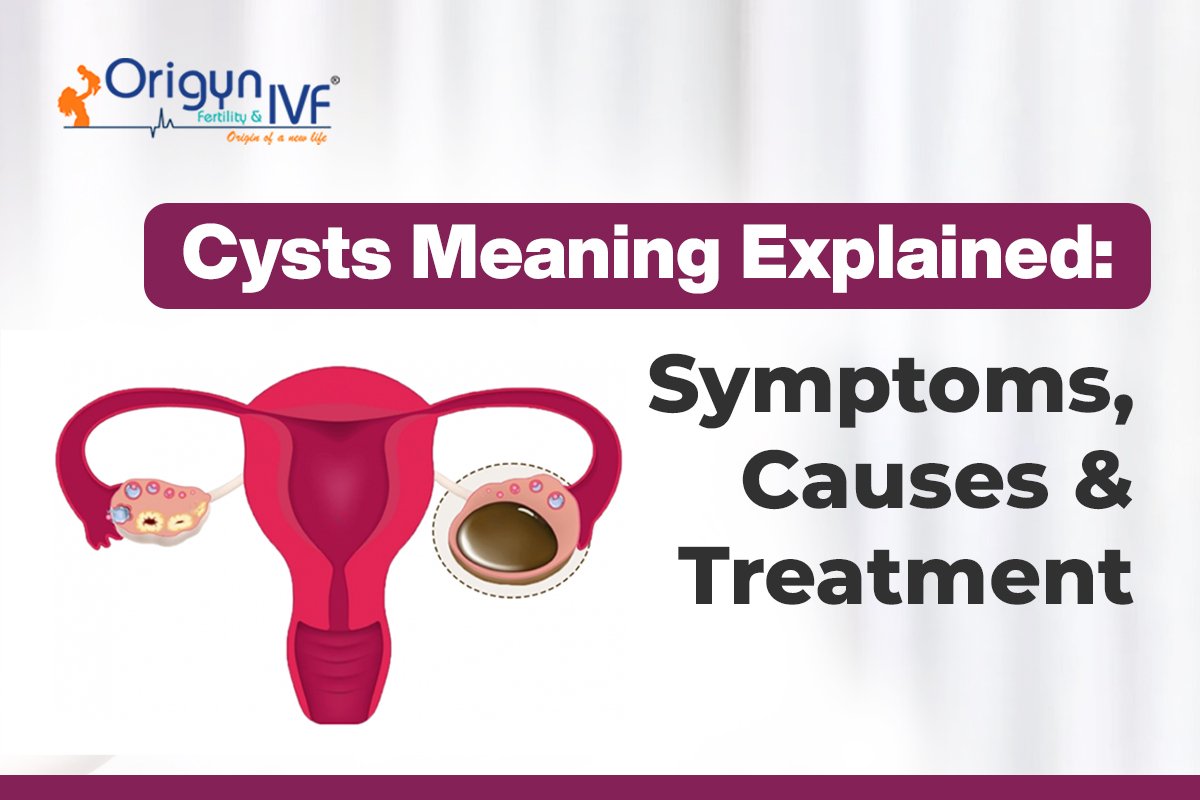
cysts

What is an Ovarian Cyst?

It refers to fluid-filled sacs or pockets that can develop in various parts of the body, such as the skin, kidneys, breasts, or reproductive organs. These growths are usually non-cancerous, but depending on their size, location, and type, they can cause discomfort and health complications.

In women, ovarian cysts are very common and form when follicles around the eggs don’t release or empty properly during the menstrual cycle. While many ovarian cysts go away on their own without treatment, some can lead to pain, bloating, irregular periods, or even fertility issues if left unmanaged.

Unfortunately, many women are unaware of the meaning and how it could affect their reproductive health. Some may only seek medical help when symptoms become severe or interfere with daily life. That’s why early diagnosis and proper care are essential to prevent complications and protect overall health.

Types


1. Functional Cysts

These are the most common type and usually develop as part of the natural menstrual cycle. They are generally harmless and often resolve on their own within a few weeks to months. Functional types include:

  • Follicular Cysts: These occur when the follicle fails to rupture and release the egg, causing the sac to enlarge.
  • Corpus Luteum Cysts: These develop after the egg is released. If the opening of the follicle closes, fluid becomes trapped inside, forming a cyst.

They rarely causes significant health issues but can occasionally lead to mild discomfort or irregular cycles.

2. Pathological Cysts

Pathological cysts are less common but can be more serious. They include:

  • Dermoid Cysts: These cysts may contain tissues such as hair, skin, or teeth.
  • Cystadenomas: Formed from cells on the outer surface of the ovary, these cysts can be filled with watery or mucous material.
  • Endometriomas: Known as “chocolate cysts,” these form when endometrial tissue grows on the ovaries, often causing pain and fertility issues.

It requires medical intervention depending on their size, growth rate, and impact on ovarian function.


Symptoms Showing Cysts

Knowing the symptoms is the first step in understanding the meaning and getting timely treatment. Given are some of the symptoms:

  • Extreme pelvic pain, especially on periods.
  • Bloating or swelling in the abdomen.
  • Irregular interval of periods.
  • Pain during intercourse.
  • Difficulty in getting pregnant.
  • Frequent urination or bowel issues.

Not all cysts causes problems, but if you experience any of the symptoms then it’s good to visit a doctor so that further treatment can be started. Below are some common causes:

1. Hormonal Changes: Fluctuations in hormones during the menstrual cycle, pregnancy, or menopause can trigger the formation of ovarian cysts.

2. Genetic Disorders: Conditions like polycystic ovarian disease causes multiple cysts in the ovaries due to inherited factors.

3. Infections: Infections can lead to abscesses that require antibiotic treatment.

4. Chronic Inflammation or Injury: Repeated irritation or trauma can also cause the formation as the body isolates damaged cells or fluids.


Real-Life Case Example: A 22-Year-Old Unmarried Girl

Let’s read this case study where a 22 years old unmarried girl who is suffering from a large ovarian cyst. In this case, the size was around 9 to 10 centimeters, causing unbearable and extreme pain. In such cases, surgery becomes important to remove the cysts.

After surgery, doctors recommend hormonal treatments to prevent cysts from coming back again. But before surgery, it’s very important to check the egg reserve like the number of healthy eggs which are available in the ovaries. Removing a large cyst might also remove some healthy ovarian tissue, which can lower fertility later on.

This is a why understanding cysts meaning, is very important as it helps you in protecting reproductive health for future.


Egg Preservation: An Essential Consideration

Doctors often suggest that young women, especially those who are unmarried, should think about egg freezing before surgery. In India, many patients are unaware of this option that if the egg reserve is already low, removing the cyst could affect fertility, making future pregnancy difficult.

Egg freezing or embryo freezing is an advanced reproductive option available today. This can be very helpful for those who need surgery or want to delay having children because of work or some other personal reasons.

So, learning about cysts meaning is not just about pain management but it’s about securing a healthy future.


For Married Women with Cysts

Many married women in their late twenties or early thirties may also suffer from ovarian cysts without having started family planning. In such cases, doctors recommend taking a proactive fertility approach.

Even mild cysts should be treated very carefully. Talking openly & clearly with your doctor about fertility goals and treatment options can help you avoid complications in future.


Treatment Options for Cysts

The treatment plan is given after knowing the factors like cyst size, symptoms, patient’s age, fertility goals, and overall health. Some of the common treatments are:

  1. Watchful Waiting: Free cysts which are small and with no symptoms does not require treatment and can be monitored with scans only.
  2. Medication: Hormonal therapies, such as birth control pills can help to regulate cycles and suppress new cyst formation.
  3. Surgery: If the cyst is large or painful, doctors may recommend removing it while preserving as much ovarian tissue as possible.
  4. Egg Preservation: For younger women at risk of losing fertility, freezing eggs before surgery is recommended.

Special Advice for Patients

Doctors advise patients to:

  • Not delaying pregnancy if you have cysts.
  • Talking openly with your doctor about fertility plans.
  • Considering egg freezing if you’re undergoing treatment that could harm fertility.

Understanding this situation can also lead to long-term complications if ignored.


Conclusion

Understanding cysts meaning goes beyond knowing that they are fluid-filled sacs. It involves recognizing how they form, identifying symptoms, understanding causes like hormonal imbalances, and exploring treatment options that not only relieve pain but also safeguard fertility.

Whether you are a young unmarried girl facing extreme pain or a married woman planning your family, learning about this condition and their management make you learn to make informed decisions about your health.

With today’s advanced medical treatments like egg preservation and IVF, cyst-related complications do not have to dictate your future. Awareness, timely intervention, and open conversations with healthcare providers are the keys to manage this condition effectively.

Take control of your health because understanding the meaning today can shape a healthier and happier future tomorrow.

For more such information related to fertility, follow Origyn IVF on Instagram and YouTube.


Frequently Asked Questions


  1. Do I require surgery for a 10cm ovarian cyst at the age of 21?

Yes, surgery is usually needed for these growths of this size due to pain and complications. Knowing the meaning helps you understand their impact, and egg freezing should be considered to preserve fertility before surgery.

  1. Will I require egg freezing before surgery?

Not in every case, but it’s highly recommended for young women with large or bilateral cysts or low ovarian reserve to protect fertility before surgery.

  1. What symptoms should I never ignore regarding this condition?

Seek medical help if you experience severe pelvic pain, bloating, irregular periods, painful intercourse, urinary issues, or signs of cyst rupture like sudden pain, nausea, or vomiting.

4. Can these ovarian growths affect my chances of getting pregnant?

In most cases, these do not impact fertility. However, large, persistent, or multiple growths can affect ovarian function, so it’s important to monitor and manage them carefully.

5. How long does it take for this condition to go away on its own?

Many functional ovarian cysts resolve within a few menstrual cycles without treatment. Regular checkups help ensure they shrink and do not cause complications.