
• 80 80 80 90 84
  • info@origynivf.com
Curious About IVF? Let's Talk.
  • January 30, 2026

Impact of Asherman’s Syndrome on Fertility in 2025

Share with your friends

About Dr. Rashmi Sharma

Dr. Rashmi Sharma is an IVF specialist, Consultant Reproductive Medicine, and Director Origyn Fertility & IVF, New Delhi. She holds MBBS (BHU), MD (BHU), DNB, MNAMS, FICOG, and a Diploma in IVF & Reproductive Medicine (Kiel University, Germany). Web Editor, Indian Fertility Society (2024–26). Former HOD, IVF Department, Moolchand Hospital, Delhi (2009–13) and Max Hospital, Pitampura, Delhi (2013–17). Director, Origyn Fertility & IVF, which has 4 branches across Delhi.

Origyn IVF has been accredited for a 1-year fellowship in IVF and Reproductive Medicine, along with an MSc in Clinical Embryology under Amity University and IFS collaboration.

Recipient of the “C. S. Dawn Award” for best paper presentation on IVF/ICSI with genital tuberculosis at the All India Congress of Obstetrics and Gynecology (AICOG 2010).

Recipient of the “Hall of Fame – Best IVF Specialist in India – North” at the Economic Times National Fertility Awards in 2019, 2023, and 2024.

Origyn IVF received the “Best IVF Center in North India” and “Most Integrated Team in IVF – North” at the Economic Times National Fertility Awards in 2019 and 2024.

Recipient of the “Best IFS Executive” award at Fertivision 2018, Kochi. Authored various chapters in reputed infertility textbooks with numerous national and international publications and presentations.

Contact Us

Blank Form (#7)

Asherman’s Syndrome is one of the most severe and hidden fertility issues facing women today. Nowadays, in 2025, more women are aware of their own reproductive health and doctors and practitioners are able to catch this condition earlier, however many women are still unaware of the long-term impact it may have on their fertility.

In plain terms, asherman’s syndrome refers to abnormal scarring, adhesions, or sticking of the inner walls of the uterus, which in turn impacts the space inside of the uterus where a baby is expected to grow. Women who are struggling to conceive after prolonged periods of time, particularly after multiple miscarriages or repeat D&C procedures should be evaluated for this diagnosis.

At Origyn Fertility & IVF, Delhi, doctors have many women who come to them after years of poor outcomes with IVF or experienced repeated pregnancy loss, and it isn’t until later that they learn this was the underlying cause.

Origyn IVF specializes in advanced diagnostic fertility evaluation and minimally invasive hysteroscopic procedures which help in treating such cases with precision and individual care.
asherman's syndrome

What is Asherman’s Syndrome?

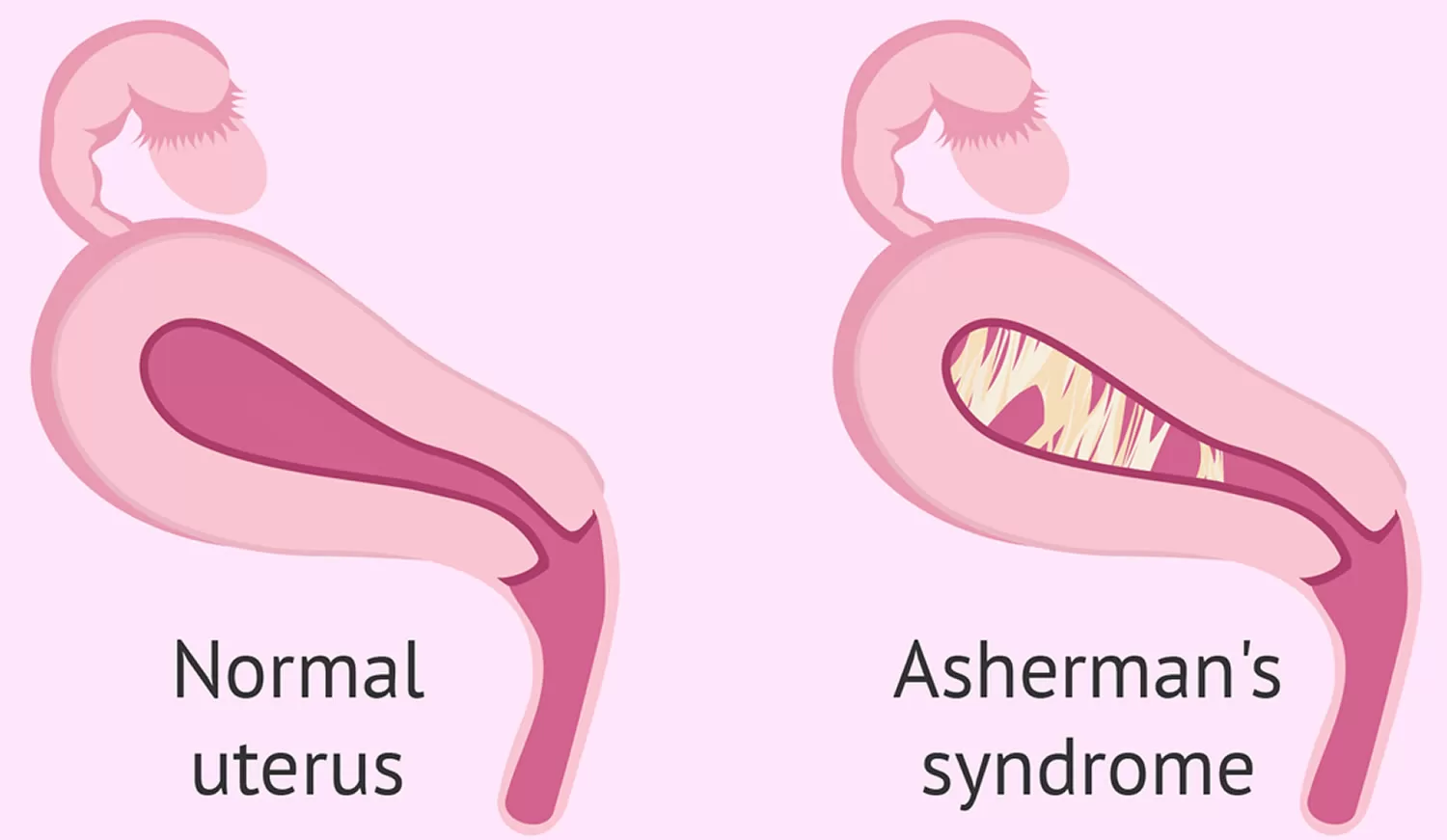
Asherman’s syndrome occurs when the inner layer of the uterus (the endometrium) becomes damaged and the damaged surfaces stick together. When this happens, the inner cavity of the uterus reduces or disappears completely. The uterus normally needs to be hollow inside because the embryo needs space to attach and grow. But in this, due to adhesions, that natural space becomes limited.

The endometrium is the layer where fertilized embryos implant during pregnancy. If this layer becomes thin or is not available because it has stuck internally, implantation becomes difficult, periods become abnormal, and infertility becomes persistent. This is why asherman’s syndrome has become one of the important topics in fertility medicine in 2025.

asherman's syndrome

Causes of Syndrome

The most common cause of is damage to the uterus lining. In India, and in other parts of the world, the most frequent reason is a D&C (dilation and curettage) procedure. This is commonly done after miscarriage, incomplete abortion, or retained products after delivery.

When curettage is done forcefully, it may remove or injure the endometrial layer deeply. Once healing takes place after such injury, scar tissue forms inside. This starts the development of asherman’s syndrome.

Other common causes include infections like tuberculosis or chlamydia. In countries like India, genital TB is still a significant cause of infertility and also a leading cause behind asherman’s syndrome in many cases.

To summarize, injury + infection + deep scraping of the uterine wall are the biggest causes.

Symptoms

Not every woman gets clear symptoms. But there are some important warning signs to track:

Signs Meaning
Reduced menstrual flow Periods become lighter than usual
Very delayed or irregular cycles The endometrium is not forming regularly
Complete absence of periods Severe form where almost entire cavity has stuck
Infertility / difficulty conceiving Implantation cannot take place

When this condition is mild, periods might look normal or slightly reduced. When moderate, there will be band-like scars affecting certain parts of the cavity. When severe, there will be almost no space left in the uterus, and periods may stop completely.

This is why timely diagnosis matters. Women who had recent miscarriage + D&C + suddenly poor periods MUST consider evaluation for this disease in 2025.


Types of Asherman’s Syndrome

Doctors clinically divide into three types so treatment decisions can be better planned:

  1. Type 1: Mild adhesions, very thin bands, cavity still mostly open.
  2. Type 2: Moderate adhesions, large patches, bigger areas of uterus affected.
  3. Type 3: Severe adhesions, whole cavity merged, no normal free space inside.

Type 3 is the most difficult to treat and many times may lead to need for repeated surgical procedures or even surrogacy as the final option.


How is it Diagnosed?

This syndrome affects the inside of the uterus, imaging is the most important tool. In 2025, the most advanced way of diagnosing this condition is hysteroscopy because the doctor can see the cavity directly.

Different diagnostic tests used include:

  1. Ultrasound

An expert ultrasound doctor can sometimes detect asymmetry, uneven lining, or strange band-like structures inside the uterus.

  1. Saline Sonography (SIS)

Here, saline fluid is pushed into the uterus and ultrasound is done at the same time. This checks whether the cavity can expand properly or not. In women with uterine problem, expansion is restricted.

  1. HSG (Hysterosalpingography)

In HSG X-ray test, dye is inserted from cervix. If there are adhesions, the dye does not fill the entire cavity normally.

  1. Hysteroscopy – The Gold Standard

Hysteroscopy is the most accurate method to diagnose the condition. A small telescope is inserted inside uterus under anesthesia and the doctor can visually inspect the entire cavity. Adhesions can even be treated in the same procedure.


Treatment of the Uterine Condition in 2025

Treatment mainly depends on severity.

  • Mild adhesions are cut using hysteroscopic scissors.
  • Moderate adhesions require careful dissection and reconstruction.
  • Severe cases might need repeated hysteroscopies and aggressive hormonal boosting.

The treatment requires patience because even after removing adhesions, tissues may stick again while healing. So after surgery, doctors often place a balloon catheter inside uterus for few days to keep walls apart.

Additionally:

  • High dose estrogen therapy is given for regrowth of endometrium
  • Follow up imaging is required every few weeks
  • Sometimes repeat surgery might be needed

Even after best treatment, not all women recover normal endometrium thickness. That is why in some extreme cases, surrogacy becomes the final recommended solution.


Impact of Asherman’s Syndrome on Fertility

The biggest negative effect is on fertility as it prevents proper embryo implantation. IVF cycles fail because uterus cannot support embryo development. Women experience repeated IVF failures without understanding the actual hidden reason.

In 2025, with increasing IVF access globally, doctors have seen that actual fertility success depends not only on embryo quality but equally on uterine environment. It destroys this uterine environment.

Women with severe asherman’s syndrome usually face:

  • Difficulty in natural conception.
  • Recurrent pregnancy losses.
  • Thin endometrium that does not respond to medicines.
  • Repeated IVF failures.

So women planning pregnancy should not ignore symptoms like suddenly reduced periods after surgical procedures. Early detection gives better chance of recovery.


How to Prevent

Prevention is better than cure. Some steps:

  • Avoid unnecessary D & C procedures
  • Prefer medically managed miscarriage when possible
  • Treat pelvic infections early
  • Screen for TB if repeated miscarriage history is present
  • Always do D&C with experienced specialists in controlled environments

With awareness, many women can prevent the syndrome before the damage becomes permanent.


Why Choosing Expert Care Matters

Management of asherman’s syndrome is completely specialized. It requires advanced hysteroscopic skill using micro-precision of surgical tools. Origyn Fertility & IVF focuses strongly on evidence-based fertility science, correct surgical method, emotional support, and individualized reproductive medicine.

At Origyn IVF, evaluation of asherman’s syndrome is done stepwise with advanced ultrasound, SIS, hysteroscopy based adhesion mapping, and site-specific treatment. The centre has treated many difficult fertility cases successfully in 2025 by identifying this hidden reason behind unexplained infertility.

Origyn IVF believes, fertility is not just about eggs or sperm, it is about the uterus environment also. When that foundation is corrected, pregnancy outcomes improve greatly.


Conclusion

Asherman’s syndrome is a highly underestimated condition. It silently damages the inner uterus cavity and affects natural conception deeply. In 2025, more women are becoming aware of uterine health and the role of the endometrium. Hence, diagnosing and treating this condition becomes even more necessary since if treated at the proper time, recovery and pregnancy rates improve dramatically.

If you notice warning signs like reduced periods after miscarriage surgery or repeated failed IVF attempts, do not wait. Get properly evaluated at the earliest.

At Origyn Fertility and IVF, our medical team provides comprehensive support, advanced diagnostic hysteroscopy evaluation, and individualized treatment plans for women with this situation. The goal is not only to treat adhesions but, more importantly, to restore fertility and provide women with the opportunity to experience healthy motherhood.

Origyn IVF is also an awareness initiative and has developed educational YouTube videos in which doctors regularly chat about a medical topic in layman’s terms and share actual case experiences, while also helping women with the evidence-based information related to fertility.

This helps patients stay informed, confident and better prepared before taking any major fertility decision.


Frequently Asked Questions

  1. Is Asherman’s Syndrome permanent?

The syndrome can be treated, especially if diagnosed early. Mild and moderate cases respond well to hysteroscopic surgery.

  1. Can women conceive naturally after Asherman’s Syndrome treatment?

Yes. Many women conceive naturally after correct treatment. But severe cases may need IVF or even surrogacy.

  1. Does Asherman’s Syndrome cause IVF failure?

Yes. Asherman’s Syndrome is a common cause of implantation failure. Even good quality embryos cannot attach if the endometrium is damaged.

  1. How long does recovery take after treatment?

Recovery time can vary an individual case, generally it can take anywhere from 6 weeks to several months depending on severity and the hormonal response of an individual.

  1. What is a good hospital for Asherman’s Syndrome treatment in Delhi?

In 2025, Origyn Fertility & IVF Delhi is one of the most trustworthy specialized centres for fertility evaluation and treatment including asherman’s syndrome treatment in Delhi.