
• 80 80 80 90 84
  • info@origynivf.com
Curious About IVF? Let's Talk.
  • January 30, 2026

Missed Abortion: Causes, Symptoms and Treatment Options

Share with your friends

About Dr. Rashmi Sharma

Dr. Rashmi Sharma is an IVF specialist, Consultant Reproductive Medicine, and Director Origyn Fertility & IVF, New Delhi. She holds MBBS (BHU), MD (BHU), DNB, MNAMS, FICOG, and a Diploma in IVF & Reproductive Medicine (Kiel University, Germany). Web Editor, Indian Fertility Society (2024–26). Former HOD, IVF Department, Moolchand Hospital, Delhi (2009–13) and Max Hospital, Pitampura, Delhi (2013–17). Director, Origyn Fertility & IVF, which has 4 branches across Delhi.

Origyn IVF has been accredited for a 1-year fellowship in IVF and Reproductive Medicine, along with an MSc in Clinical Embryology under Amity University and IFS collaboration.

Recipient of the “C. S. Dawn Award” for best paper presentation on IVF/ICSI with genital tuberculosis at the All India Congress of Obstetrics and Gynecology (AICOG 2010).

Recipient of the “Hall of Fame – Best IVF Specialist in India – North” at the Economic Times National Fertility Awards in 2019, 2023, and 2024.

Origyn IVF received the “Best IVF Center in North India” and “Most Integrated Team in IVF – North” at the Economic Times National Fertility Awards in 2019 and 2024.

Recipient of the “Best IFS Executive” award at Fertivision 2018, Kochi. Authored various chapters in reputed infertility textbooks with numerous national and international publications and presentations.

Contact Us

Blank Form (#7)

Pregnancy is a joyful journey, but for some women, it can be challenging with a diagnosis of missed abortion. This word can be stressful and the emotional impact is difficult to overcome. But, knowing what it means, why it happens, and how it can be managed can help you to take careful steps towards physical recovery and emotional well-being.

In this blog covers causes, diagnosis, and the treatment options for missed abortion at Origyn IVF. We will also learn how to prepare for a healthy pregnancy in the future and where you can seek expert care.
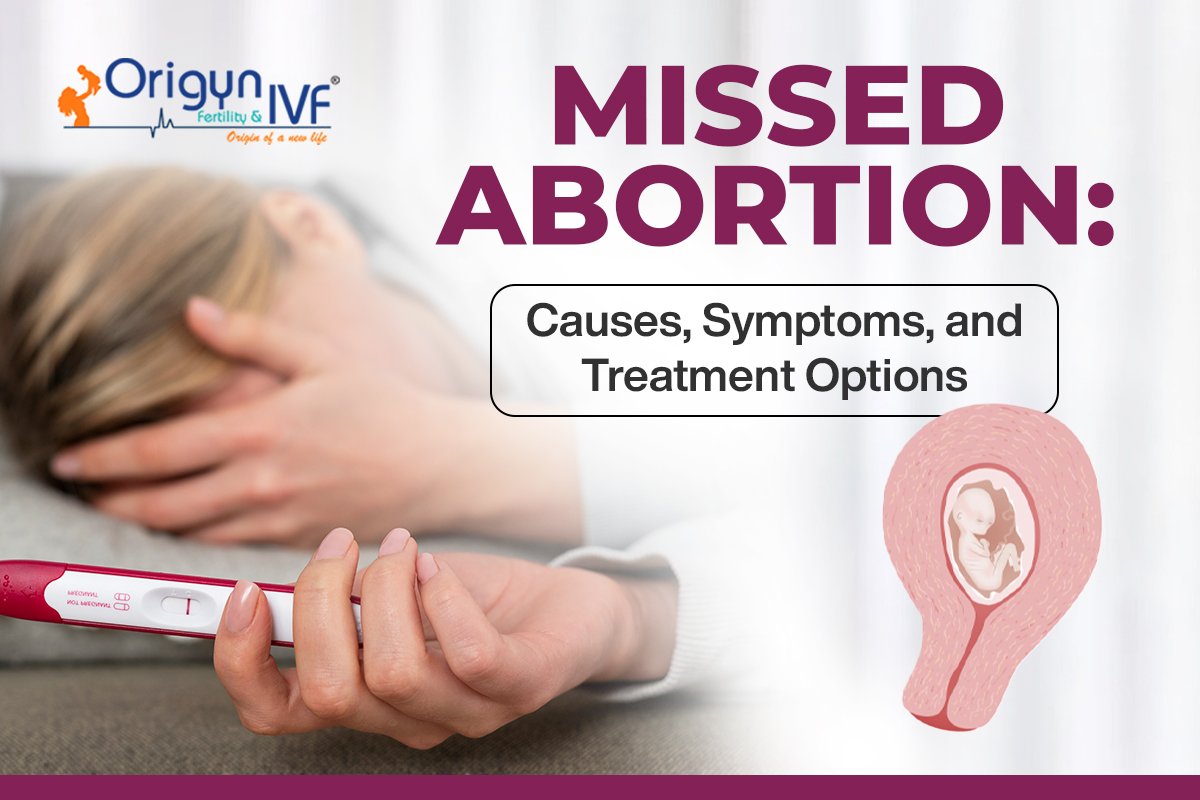
Missed Abortion

What is Missed Abortion?

Missed abortion refers to a pregnancy loss which usually occurs within the first three months of pregnancy, where the baby is no longer alive, and the heartbeat has stopped working, but there are no immediate symptoms such as heavy bleeding or severe pain in the body.

Most women with a missed abortion feel completely normal until the diagnosis is made during an ultrasound scan. This can come as a shock especially when the pregnancy seemed to be progressing well just a few days earlier. The absence of symptoms is one of the reasons this condition is termed “missed.”


How is Missed Abortion Diagnosed?

Usually a missed abortion is found during regular checkup of ultrasound scan. The doctor sees that the fetal heartbeat is absent, even though the pregnancy sac remains in the uterus. Sometimes early pregnancy dates can be uncertain, so the doctors asks to wait 4–5 days and do another ultrasound to verify the results. This short waiting period serves two purposes:

  1. Emotional Preparation: It gives you time to understand and cope up with the news.
  2. Accurate Results: If the conception is late than expected, the heartbeat might become visible in the next scan.

Missed Abortion: A Medical Emergency?

A missed abortion is not usually an emergency situation. Once diagnosed, you have few days to decide on the next steps to go for. This time helps you prepare for emotional preparation and for your doctor to determine the safest method for treatment of missed abortion.


Management of Missed Abortion

Once the results are positive, the next step is to remove the pregnancy tissue from the uterus. This is done in three ways.

1. Expectant Management

This body remove the pregnancy tissue naturally without medical intervention. Many women prefer this method as this avoids medicines & surgery. However, its better not to wait longer than two weeks, as retaining pregnancy tissue for extended periods increases the risk of infection.

Pros:

  • Natural process, so no medical intervention.
  • It does not require hospital procedures.

Cons:

  • Bleeding and cramps can happen at unpredictable times.
  • High chance of infection if it lasts too long.

2. Medical Management

Medical treatment for a missed abortion uses medicines to help the body remove the pregnancy tissue. It is done in two steps:

  1. Mifepristone: An anti-progesterone drug taken orally. Progesterone supports pregnancy, so blocking it causes the pregnancy to stop progressing.
  2. Misoprostol: Given 24–48 hours later (orally or vaginally) to soften the cervix and stimulate uterine contractions, helping to expand the tissue.

This approach is effective in 70–90% of cases. An ultrasound is done 10–12 days later to confirm that the uterus is clear. If any tissue remains, a surgical procedure is required.

3. Surgical Management

Surgical removal of the pregnancy tissue is advised, in some cases. After opening the cervix, medical tools are used to remove tissue from the uterus.

Advantages:

  • Quick (usually completed in a single day)
  • Can be done under anesthesia for comfort

Possible Risks:

  • Uterine injury or scarring (rare)
  • Infections

Doctors usually reserve surgical management for situations where medical management is not suitable for example, if the woman has significant anemia, clotting disorders, heavy bleeding, or if the medicines have failed.


What are the Reasons of Missed Abortion?

One of the most distressing questions women ask is, “Why did this happen?” Usually, a missed abortion does not happen because of the mother.

The most common cause around 60–70% of cases- is chromosomal abnormalities in the baby. This is nature’s way of ending a pregnancy that could not develop normally.

Other less common causes include:

  • Uterine abnormalities such as a septum.
  • Blood clotting disorders.
  • Infections e.g., rubella, certain viral infections.
  • Hormonal imbalances like uncontrolled thyroid or diabetes.
  • Autoimmune conditions where the immune system attacks the pregnancy.

The key message: Self-blame has no place here. Missed abortion is usually beyond your control.


Preparing for the Next Pregnancy

If this is your first missed abortion, most doctors do not recommend extensive investigations. You can usually try again after your body and mind have recovered, which may take a few months.

However, tests is recommended when:

  • You had two or more pregnancy losses.
  • The pregnancy occurred through IVF or IUI.
  • You are above the age of 35.
  • The loss happened along with other risk factors.

Tests that can be includes:

  • Genetic testing is done for both partners.
  • 3D ultrasound or hysteroscopy to check for uterine abnormalities.
  • Blood tests for clotting disorders (thrombophilia screen)
  • Autoimmune and thyroid antibody testing.

Your doctor will use these results to guide preventive measures for your next pregnancy.


Emotional Support and Hope for the Future

The loss of a pregnancy especially a missed abortion is like a silent grief which is filled with emotions & sadness. The absence of physical warning signs can make the emotional impact even greater. It’s important to know these feelings and give yourself time to heal.

Counseling, support groups, or even conversations with your partner and close friends can help you to overcome with emotional impact. Remember, one in four pregnancies ends in miscarriage, and the majority of women have healthy babies in the future.

Visit Origyn IVF for Treatment of Missed Abortion

At Origyn IVF, we understand the challenges that come with a missed abortion. Our team provides comprehensive care, from correct diagnosis to safe missed abortion treatment options. We also focus on emotional support, helping you prepare for your next pregnancy with full confidence.

Whether you choose expectant, medical, or surgical management, our priority is your safety, comfort, and future fertility.

Location: Pitampura, Vikaspuri & South Ex (For more details check the official website)

Contact us: 8080809084

Instagram: origynfertilityandivf

YouTube: Origyn IVF


Conclusion

A missed abortion can be a heartbreaking experience, but with the right information, medical care, and emotional support, you can recover and move forward toward a healthy pregnancy. Understanding that it is often a result of natural factors and not your fault. This can help ease self-blame and encourage healing.

With expert guidance, appropriate missed abortion treatment and time, many women go on to have healthy and successful pregnancies.


Frequently Asked Questions

  1. What is a Missed Abortion?

A missed abortion occurs when the pregnancy is no longer possible, but the body has not removed the tissue. It is usually detected via ultrasound.

  1. Is Missed Abortion Painful?

There are no immediate symptoms such as pain or bleeding. Discomfort may occur later when the body starts expelling the pregnancy tissue.

  1. How is Missed Abortion Treated?

Treatment can be expectant (waiting naturally), medical (medications), or surgical (D&C). Your doctor will guide you based on your health and preference.

  1. Can I Get Pregnant Again After a Missed Abortion?

Yes. Most women go on to have healthy pregnancies, even after one or more missed abortions.

  1. How Soon Can I Try For Pregnancy After Missed Abortion Treatment?

You can usually try again after 2–3 menstrual cycles, once your body and emotional health have recovered.