
• 80 80 80 90 84
  • info@origynivf.com
Curious About IVF? Let's Talk.
  • January 30, 2026

Endometriosis Treatment: The Complete Guide for 2025

Share with your friends

About Dr. Rashmi Sharma

Dr. Rashmi Sharma is an IVF specialist, Consultant Reproductive Medicine, and Director Origyn Fertility & IVF, New Delhi. She holds MBBS (BHU), MD (BHU), DNB, MNAMS, FICOG, and a Diploma in IVF & Reproductive Medicine (Kiel University, Germany). Web Editor, Indian Fertility Society (2024–26). Former HOD, IVF Department, Moolchand Hospital, Delhi (2009–13) and Max Hospital, Pitampura, Delhi (2013–17). Director, Origyn Fertility & IVF, which has 4 branches across Delhi.

Origyn IVF has been accredited for a 1-year fellowship in IVF and Reproductive Medicine, along with an MSc in Clinical Embryology under Amity University and IFS collaboration.

Recipient of the “C. S. Dawn Award” for best paper presentation on IVF/ICSI with genital tuberculosis at the All India Congress of Obstetrics and Gynecology (AICOG 2010).

Recipient of the “Hall of Fame – Best IVF Specialist in India – North” at the Economic Times National Fertility Awards in 2019, 2023, and 2024.

Origyn IVF received the “Best IVF Center in North India” and “Most Integrated Team in IVF – North” at the Economic Times National Fertility Awards in 2019 and 2024.

Recipient of the “Best IFS Executive” award at Fertivision 2018, Kochi. Authored various chapters in reputed infertility textbooks with numerous national and international publications and presentations.

Contact Us

Blank Form (#7)

Endometriosis treatment has become a focus in gynecology, as this condition silently affects millions of women worldwide and is often left undiagnosed. Women visiting gynecology clinics frequently complain of chronic lower abdominal pain that persists throughout the menstrual cycle. Despite regular medical checkups, many are unaware that their suffering might be due to endometriosis.

In this blog, we will know what endometriosis treatment is, its symptoms, why it occurs, and the options available for diagnosis and treatment in 2025.
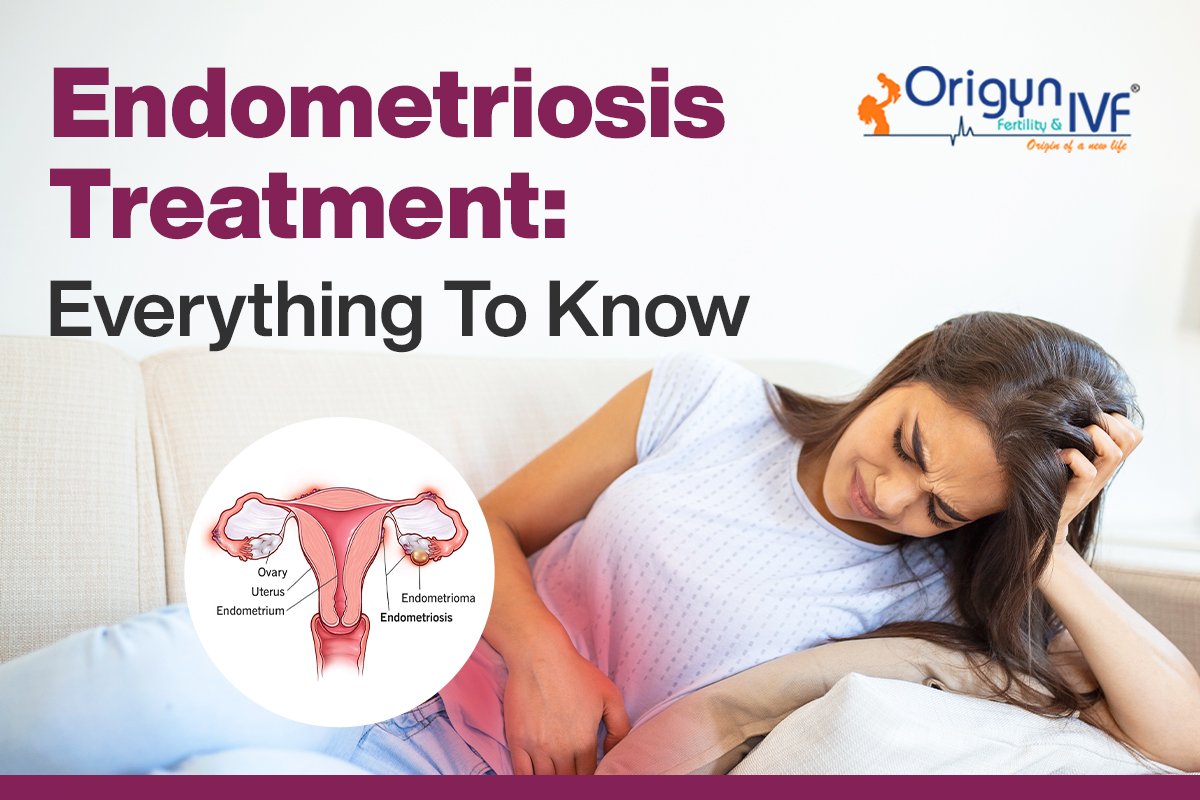
Endometriosis Treatment

What is Endometriosis?

It is a condition where tissue that grows inside the lining of uterus called the endometrium grows outside the uterus. This tissue can grow on the ovaries, fallopian tubes, pelvic lining, bladder, or intestines.

Although it is non-cancerous, endometriosis is often referred to as a “benign cancer” because of how severely it impacts a woman’s life. The misplaced tissue behaves like the uterine lining, thickening, breaking down, and bleeding with each menstrual cycle. But unlike menstrual blood, it has nowhere to go that leads to inflammation, cysts, adhesions, and severe pain.

For many women, this pain can go on for years before they receive a proper diagnosis and begin the correct endometriosis treatment.


Why & How does it happen?

The exact cause of endometriosis is unknown, but one theory is retrograde menstruation, where menstrual blood flows backward through the fallopian tubes into the abdomen, causing tissue to grow outside the uterus. Along with the blood, fragments of the endometrial lining get deposited on other organs, where they start to grow and bleed every month.

However, this theory doesn’t explain everything about endometriosis treatments. Retrograde menstruation is known to occur in most women, but only a few develop endometriosis. The question arises is why does it happen only in some women, what’s the main reason?

Other possible theories are:

  • Immune system dysfunction
  • Genetic predisposition
  • Hormonal imbalance

It is a progressive and painful disease that requires timely and effective endometriosis treatment.


Signs & Symptoms of Endometriosis

Endometriosis symptoms can vary from woman to woman. Some have mild discomfort, while others may experience debilitating pain. Some of the common signs are:

  • Pain in lower abdominal especially during periods.
  • Heavy pain during or after intercourse.
  • Painful urination or bowel movements during menstruation.
  • Heavy flow or irregular periods.
  • Symptoms lie fatigue, nausea, or bloating.
  • Infertility or difficulty in conceiving.

Pain doesn’t always match the severity of endometriosis. Some women with severe disease feel no pain, while others with mild disease may experience intense discomfort.


How Common is Endometriosis?

Endometriosis is more common than most people actually think. According to approximates, around 6 to 10 percent of women of reproductive age suffer from this condition. In fertility clinics, the number is even higher nearly 1 in 4 or 5 women dealing with infertility have underlying endometriosis.

Moreover, this condition doesn’t discriminate by age. It can affect girls of different ages like teenage girls, young women, and those in their 40s alike. Even unmarried girls or those who haven’t yet started family planning can suffer from the painful effects of endometriosis. Sadly, many people think period pain is “normal.” That’s why awareness and accurate diagnosis are key parts of endometriosis treatment.


Diagnosis & Staging

One of the major challenges in dealing with endometriosis is the delay in diagnosis like on an average, it takes 7–8 years for a woman to get properly diagnosed after first experiencing symptoms.

Diagnostic Methods Include:

  • Ultrasound: This help to identify ovarian endometriomas (cysts).
  • MRI: It is useful for mapping the extent of the disease before surgery.
  • Laparoscopy: It’s a minimally surgery, considered the best way to confirm endometriosis. It allows the doctor to see inside and take a sample of tissue.

Once diagnosed, endometriosis is graded from stage I (mild) to stage IV (severe) based on how much tissue is affected and if cysts or scar tissue are present.


Endometriosis Treatment Option: Medical vs Surgical

Endometriosis can’t be fully cured, but treatments can relieve pain, improve daily life, and help with fertility.

1. Medical Management

Medical treatment focuses on controlling hormone levels to slow the growth of endometrial tissue.

  • Pain relief medications: Inflammation can be reduced by ibuprofen.
  • Hormonal therapies: These include birth control pills, progestins, GnRH agonists, and hormonal IUDs that suppress menstruation and reduce pain.

Medical management is ideal for women who are not planning to conceive soon and have mild to moderate symptoms.

2. Surgical Management

For severe cases or when medical treatment fails, surgery may be necessary.

  • Laparoscopic surgery: Used to remove or destroy endometrial growths, break adhesions, and restore organ function.
  • In complex cases, hysterectomy (removal of the uterus) might be considered, especially if fertility is no longer a goal.

However, recurrence is possible even after surgery, so long-term management is essential. A tailored endometriosis treatment plan combining both medical and surgical approaches often gives the best outcome


Can You Conceive with Endometriosis?

Yes, many women with endometriosis can conceive naturally, especially in the early stages as endometriosis is one of the main causes of infertility. It can affect fertility by:

  • Blocking or damaging the fallopian tubes.
  • Causing inflammation that interferes with egg and sperm interaction.
  • Reducing egg quality due to ovarian cysts (endometriomas).

There are fertility treatments which can help like ovulation induction, intrauterine insemination (IUI), or in vitro fertilization (IVF) can help. The right endometriosis treatment, guided by a fertility specialist, can significantly improve your chances of a healthy pregnancy.


Conclusion

Endometriosis is a misunderstood yet widespread condition that impacts millions of women, often in silence. If you’re experiencing persistent pelvic pain, painful periods, or unexplained infertility, don’t ignore the signs. Early diagnosis and a customized endometriosis treatment plan can make all the difference.

With advancements in medical science and a better understanding of the condition, women no longer need to suffer in silence. Help is available, and with the right care, you can live pain-free and achieve your dreams of motherhood.


Visit Origyn IVF for Expert Endometriosis & Fertility Care

At Origyn IVF, we specialize in endometriosis treatment and fertility care. Our expert team of gynecologists and fertility specialists understands how complex and frustrating this condition can be. We offer a comprehensive approach that includes:

  • Advanced diagnostics including ultrasound and laparoscopy.
  • Personalized medical and surgical treatment plans.
  • Fertility support including IVF, IUI, and ICSI.
  • Compassionate counseling and ongoing care.

Whether you’re looking for pain relief or planning a pregnancy, we’re here to guide you every step of the way.

  • Email: info@origynivf.com
  • Phone: +91 80808 09084
  • Follow on YouTube: OrigynIVF
  • Appointment: Either take online appointments or visit the clinic.
  • Address: Vikaspuri, Pitampura, South Ex (Check the official website for Days and Timings)

Frequently Asked Questions

Q1. Can Endometriosis Go Away On Its Own?

No, endometriosis usually doesn’t resolve without treatment. However, symptoms may improve temporarily during pregnancy or after menopause.

Q2. Is There a Permanent Cure For Endometriosis?

There is no permanent cure, but long-term endometriosis treatment can manage symptoms effectively.

Q3. Can I Get Pregnant Naturally If I Have Endometriosis?

Yes, especially in early stages. However, many women may need fertility treatment depending on the severity of their condition.

Q4. Is Surgery Necessary For Endometriosis?

Not always. Many women manage well with medical treatment. Surgery is considered if symptoms are severe or fertility is affected.

Q5. How Soon Should I See A Doctor If I Suspect Endometriosis?

If you’ve been having chronic pelvic pain, painful periods, or difficulty conceiving, consult a gynecologist or fertility specialist promptly.