
Oocyte Cryopreservation
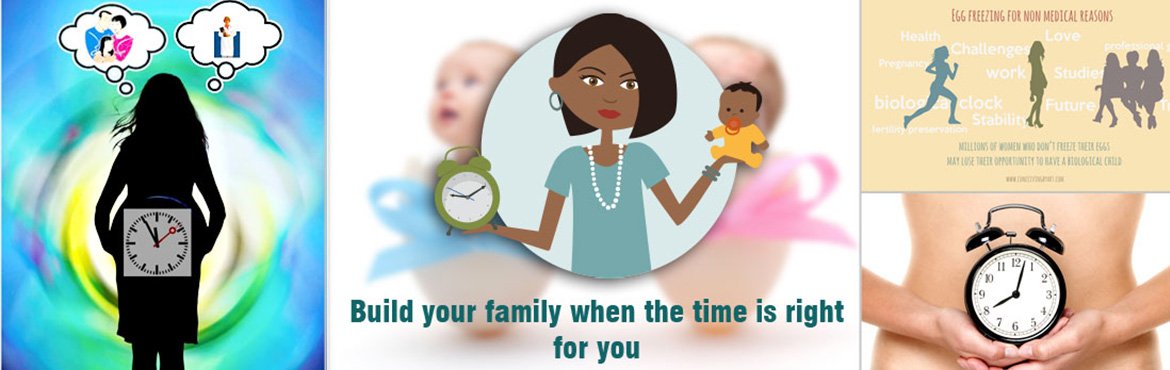
As we know unlike in case of men a women’s reproductive life is limited by age. So if a decides to postpone getting pregnant either due to personal/professionals reasons or medical reasons. Oocytes Banking is exciting technology, it has really change a life of lots of women. The intention of the procedure is to secure future fertility by preserving their eggs just like Diana Hayden (Miss World) did.
WHO SHOULD OPT FOR EGG FREEZING

Egg freezing: Girls who are suffering from cancer and have to undergo chemotherapy and radiotherapy can get their eggs freezed . Over 50000 reproductive age women are diagnosed with cancer each year in US. This number is higher in India. As chemotherapy and radiotherapy are toxic for oocytes and in these therapies the ovary can be damaged so egg freezing offers women with cancer to preserve their eggs to utilize them in attempt to have children in the future.

Early Menopause: A women with a family history of early menopause. Turness Syndrome (a chromosomal abnormality that comes with a risk of premature ovarian failure). Or a genetic mutation that leads to decline in ovarian reserve or removal of ovary may be the last option.
Premenopausal is a time of transition –the change of life – Your ovaries are starting to produce less estrogen & progesterone. LH & FSH levels are starting to rise as your ovaries are ecoming less responsive to them.

Career – Career oriented women and girls nowadays are busy with their life so are opting for late marriages .So some of these girls before the age of 35 do come forward and freeze the oocytes so than even if they wish to have a child in their 40’s these oocytes can be thawed and used for conception.
Social-Egg freezing: Egg freezing for the purpose of preserving fertility for delayed hildbearing when natural conception becomes more problematic. Even now many MNC companies are too providing egg freezing facility to unmarried girls, so that if they are doing justice with their job in the mean time would lose the chance to have their own baby due to low ovarian reserve.
STEPS OF EGG FREEZING

STEP 1: CONSULTATION
Your content goes here. Edit or remove this text inline or in the module Content settings. You can also style every aspect of this content in the module Design settings and even apply custom CSS to this text in the module Advanced settings.

STEP 2: STIMULATION
STEP 3: FOLLICULAR STUDY
These scans are done regularly to assess follicular development. The size of the follicles indicates the degree of egg maturity, usually 10-15 follicles will develops in the ovaries during standard stimulation protocol.
STEP 4: EGG RETRIEVAL
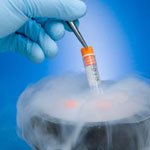
STEP 5: EGG FREEZING
SUCCESS RATES
In a 2013 meta-analysis of more than 2,200 cycles using frozen eggs, scientists found the probability of having a live birth after three cycles was 31.5 % for women who have frozen their eggs at age 25, 25.9 % at age 30,19.3 % at age 35 and 14.8 % at age 40.
RISKS
The risks for women undergoing egg freezing includes
- Vaginal/Uterine bleeding from the oocyte recovery procedure
- Developing ovarian hyperstimulation syndrome (OHSS) as a reaction to the hormones used to induce hyper Ovulation (producing more than one egg). But now a days with avoidance of injection HCG for final maturation, OHSS can be completely avoided. Infact now we have OHSS free clinic.
Book a Free Consultation
Other Treatment
- $IVF TREATMENT
- $IUI TREATMENT
- $ICSI TREATMENT
- $EGG DONOR TREATMENT
- $blastocyst transfer